
The French painter Auguste Renoir once said: “Black is the queen of colours, because black contains
all the colours”.
I use X-ray images as inspiration for my paintings, and I feel them to be both very private and at the same time impersonal; individuality has been lost in them, and in a fleeting moment the bones become a pattern.
The wonder lit up by X-rays is visible to us only thanks to the black ground, which brings out those beautiful ornamental patterns running from grey to brilliant white. They make us notice the fragility of a human being and of a plant, the force of life, and the presence of time flowing away.
Black without white, without the light, is depth, silence, mystery. To arrive at harmony, black has to be raised to other heights by being filled with light.
The painter Dita Lūse is an artist of the middle generation, trained in Latvia, Denmark and the USA.
Dita Lūse's body of work includes nearly forty solo exhibitions, and she takes part regularly in
and has been recognised in group and juried exhibitions both in Latvia and abroad. She has won acclaim in various art competitions, including twice in the international Art Olympia competition in Japan, several times at the international art festival Art Revolution Taipei in Taiwan, and in the Aviskar
competition in India. Her works have also been chosen by juries for internationally significant art projects such as the Beijing Biennale in China, Arte Laguna in Venice and, twice, NordArt in Germany.
The works are held in public and private collections in Latvia, Lithuania, Germany, France, Italy, Portugal, Greece, the Netherlands, the Czech Republic, Slovenia, Sweden, Denmark, the United Kingdom, the USA, Taiwan, Hong Kong, Singapore and India.
About the artist
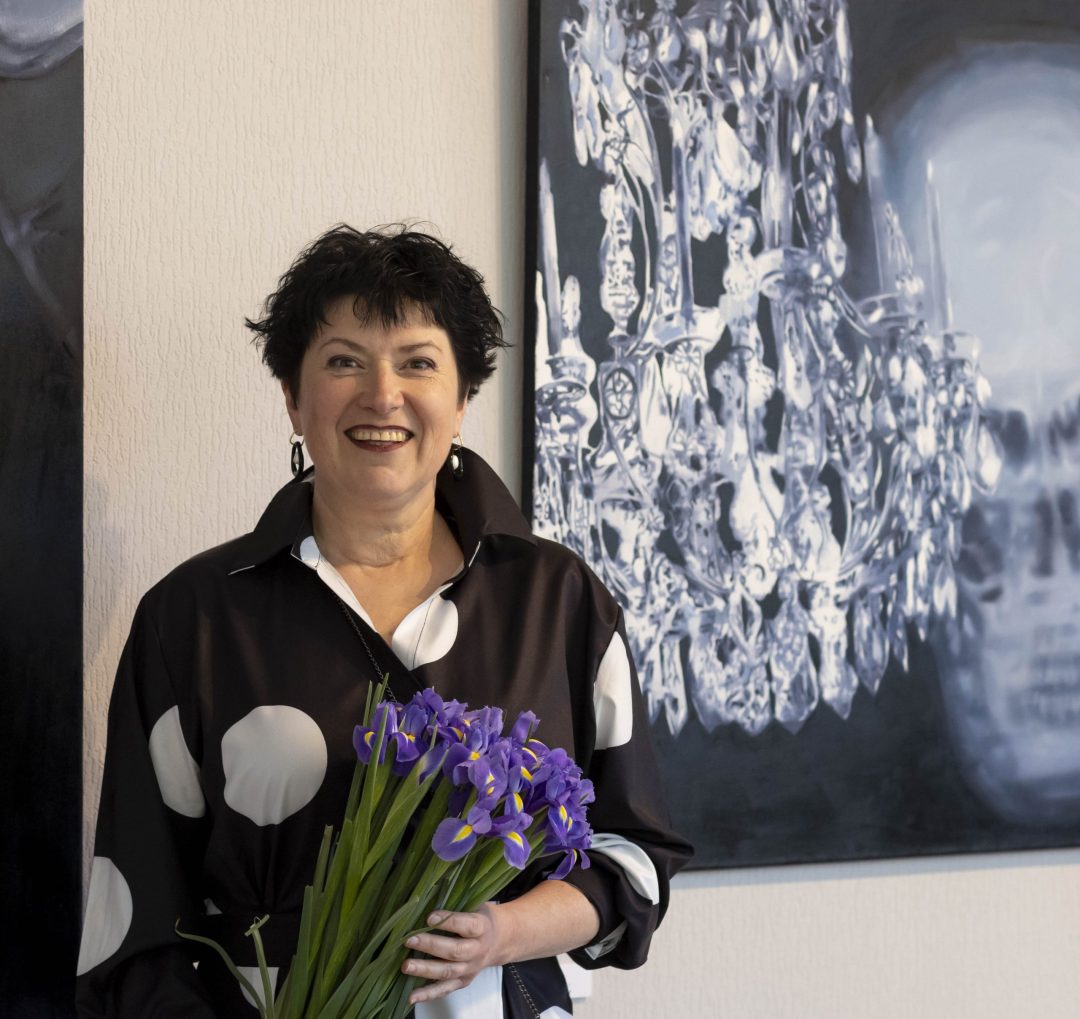
Dita Lūse
Dita Lūse is widely known for her nuanced oil paintings and for her particular technique in oil, which recalls the fragility of watercolour — thin, many-layered applications of paint make an impression of lightness and transparency. Her work takes in a wide range of subjects, but at its centre stand the relations of light and time. Lūse often depicts spaces saturated with the presence of memory, bringing out the depth and atmosphere that light creates.